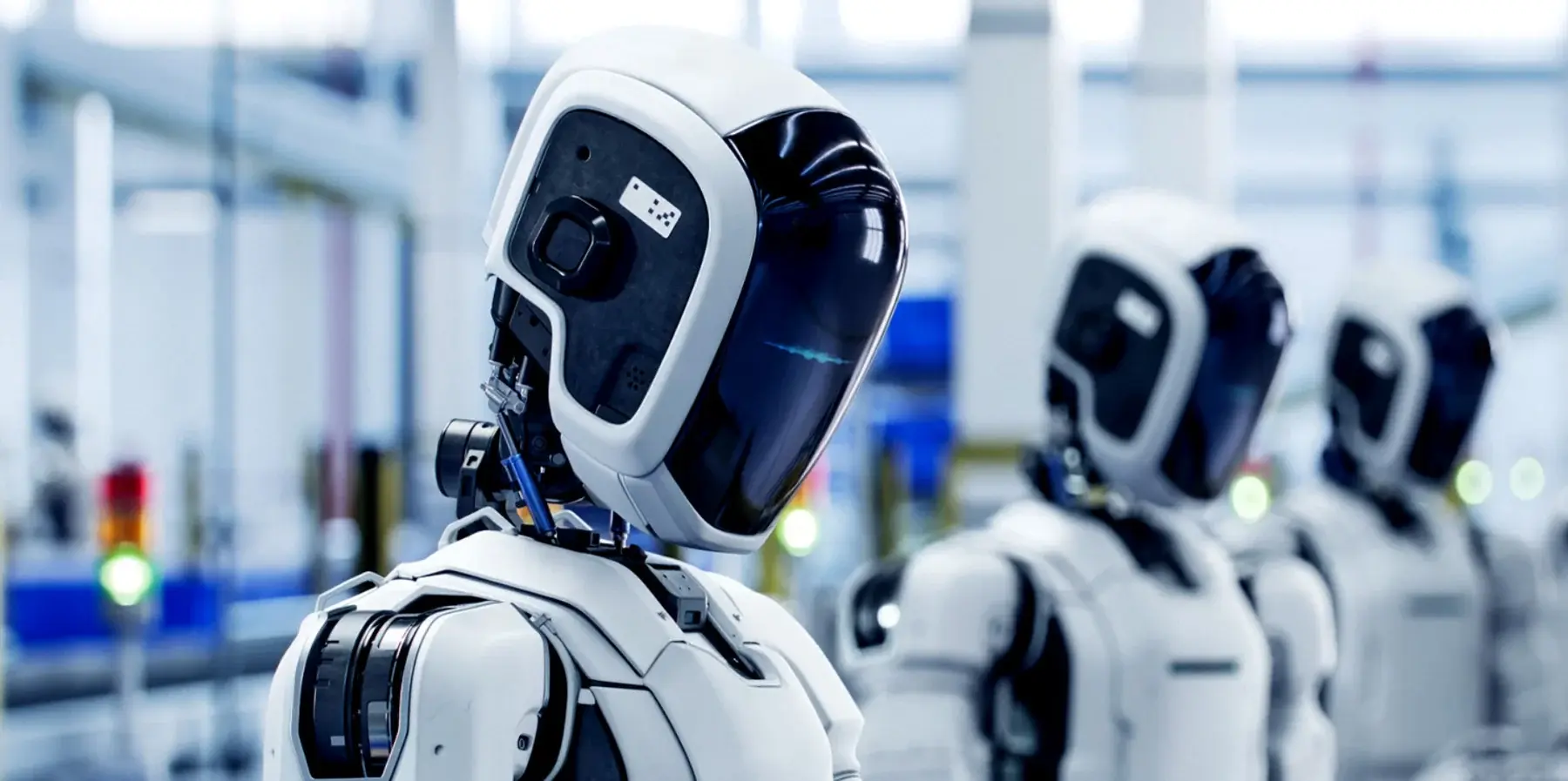
$46,000
Built with Chinese parts //
Tesla Optimus Gen 2, component cost
$131,000
Built without them //
The same robot, the same design
Nothing about the robot changes between those two figures. The design, the software and the factory stay the same, and the bill nearly triples. So the price of a humanoid robot is set by who makes a short list of components. This thesis is about that list: which parts carry the cost, which parts still do not work, and which of them an Indian company can credibly supply.1
§ 01 //
The cost of a humanoid sits in its joints
Actuators are 40 to 60% of what a humanoid costs to build.2 An actuator is the motor-and-gear unit that moves one joint, and a humanoid carries a lot of them. The latest Optimus has more than 50 in its two hands and roughly 25 to 30 in the rest of its body.3
Actuators //
40 to 60% of build cost
Sensors //
10 to 20%
Onboard computer //
10 to 15%
Frame //
5 to 10%
Battery //
5 to 10%
The remaining cost is spread thin. Batteries and processors borrow from electric cars and phones, industries that already build at scale, so they get cheaper without anyone in robotics doing the work. A complete robot costs between $30,000 and $150,000 in parts today, against an industry target below $20,000.2 Published estimates of the actuator share run from 21% to 70% depending on whether hands and circuit boards are counted inside it, and on every version of the count the joint is the largest line.4
§ 02 //
Inside the joint, the gearbox is the expensive part
The gearbox is 30 to 50% of an actuator's cost, the circuit board that drives the motor is 15 to 20%, and the motor is 10 to 20%.2
A motor spins fast and weakly. A joint has to turn slowly and with force, and that turning force is called torque. The gearbox converts one into the other, and a robot maker chooses between two ways of doing it.
The first is to gear heavily. A strain-wave gearbox is a compact precision gear that holds its position with almost no play. It is ground to tolerances a handful of firms can hold: Harmonic Drive Systems and Nabtesco in Japan, with Leaderdrive and Laifual in China taking share.4
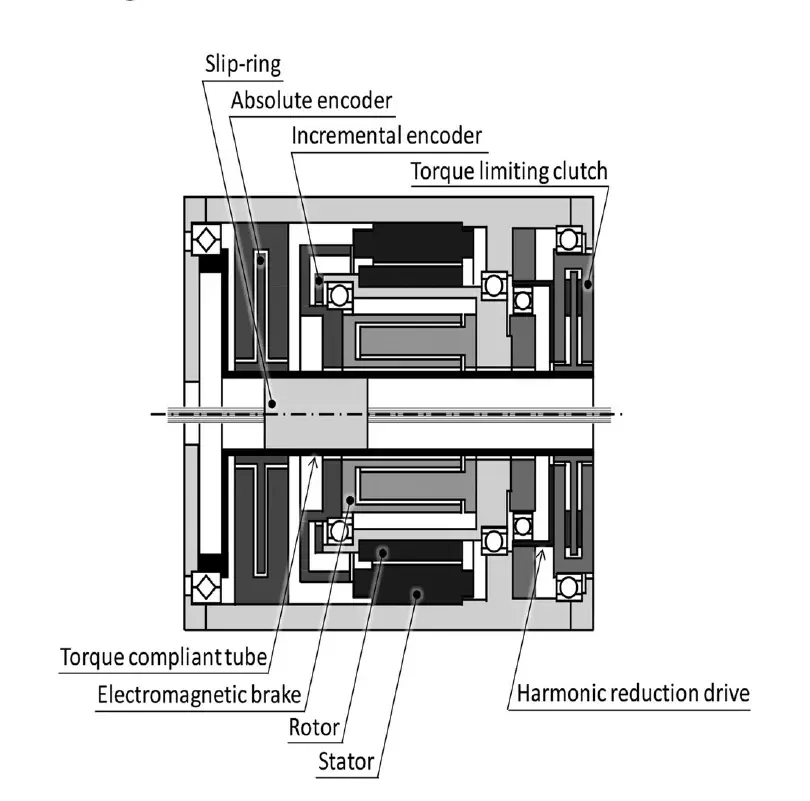
The second is to gear lightly with a planetary gearbox, the ordinary gear set inside a car's automatic transmission, and make up the difference with a bigger motor. That joint is up to 80% cheaper, runs at 95 to 98% efficiency against 85 to 90%, and survives a foot hitting the ground.4
In 2020 the precision gearbox was the standard across humanoids.5 By 2026 Unitree had built its robots around the simple one, and several leading makers used it in legs and hips.4 Wrists and hands still take the precision gearbox, because a hand has to hold position inside a small space.
§ 03 //
The cheap joint needs more magnet, and China makes the magnets
A bigger motor needs more magnet, more copper and better cooling. The magnets are sintered neodymium, the strongest permanent magnets in production, and China makes about 94% of them, up from roughly half twenty years ago.6
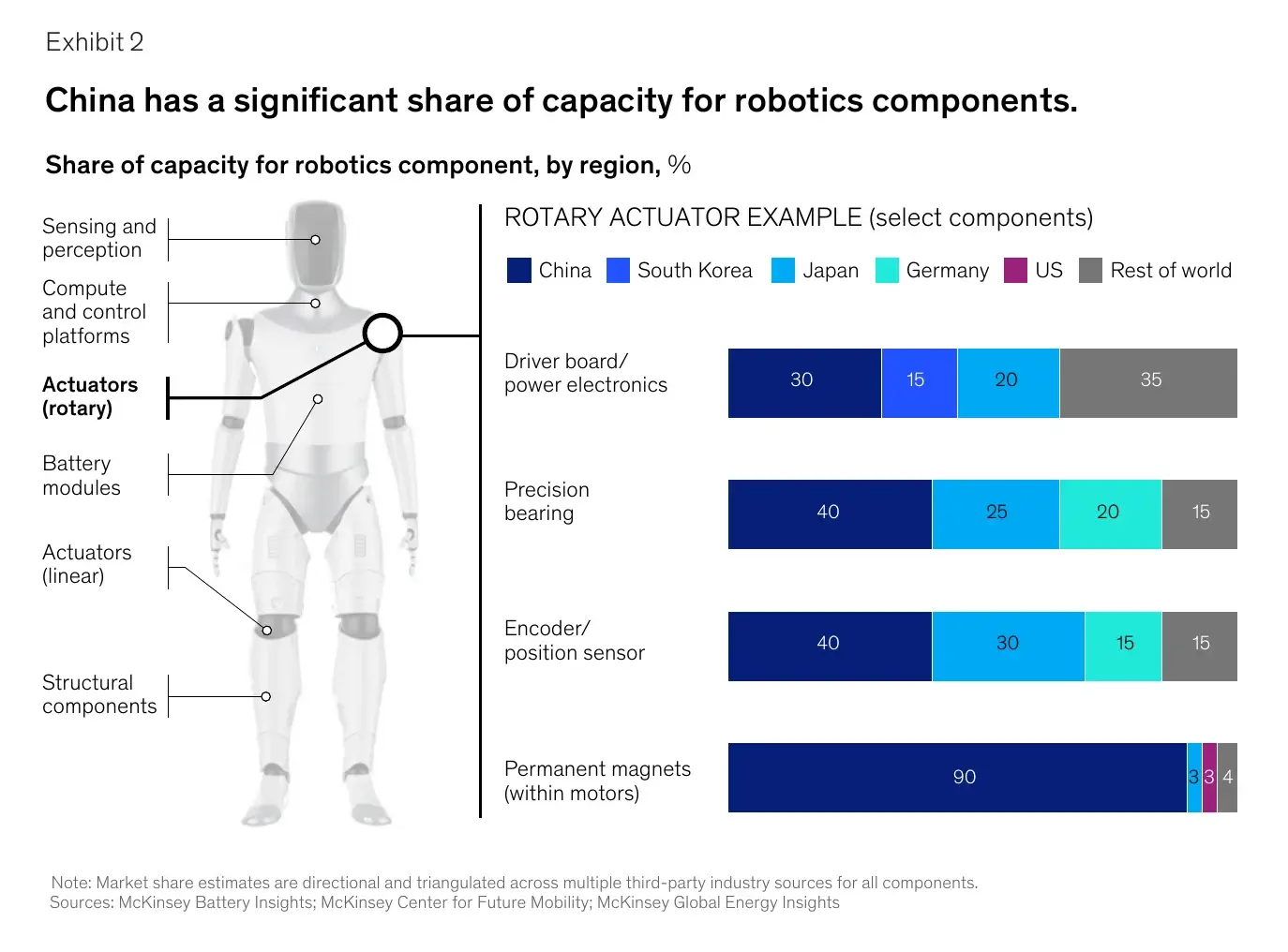
So the design that frees a robot maker from a few Japanese gear grinders hands it to a narrower supplier base. That is the mechanism behind the $46,000 and the $131,000 in the opening.
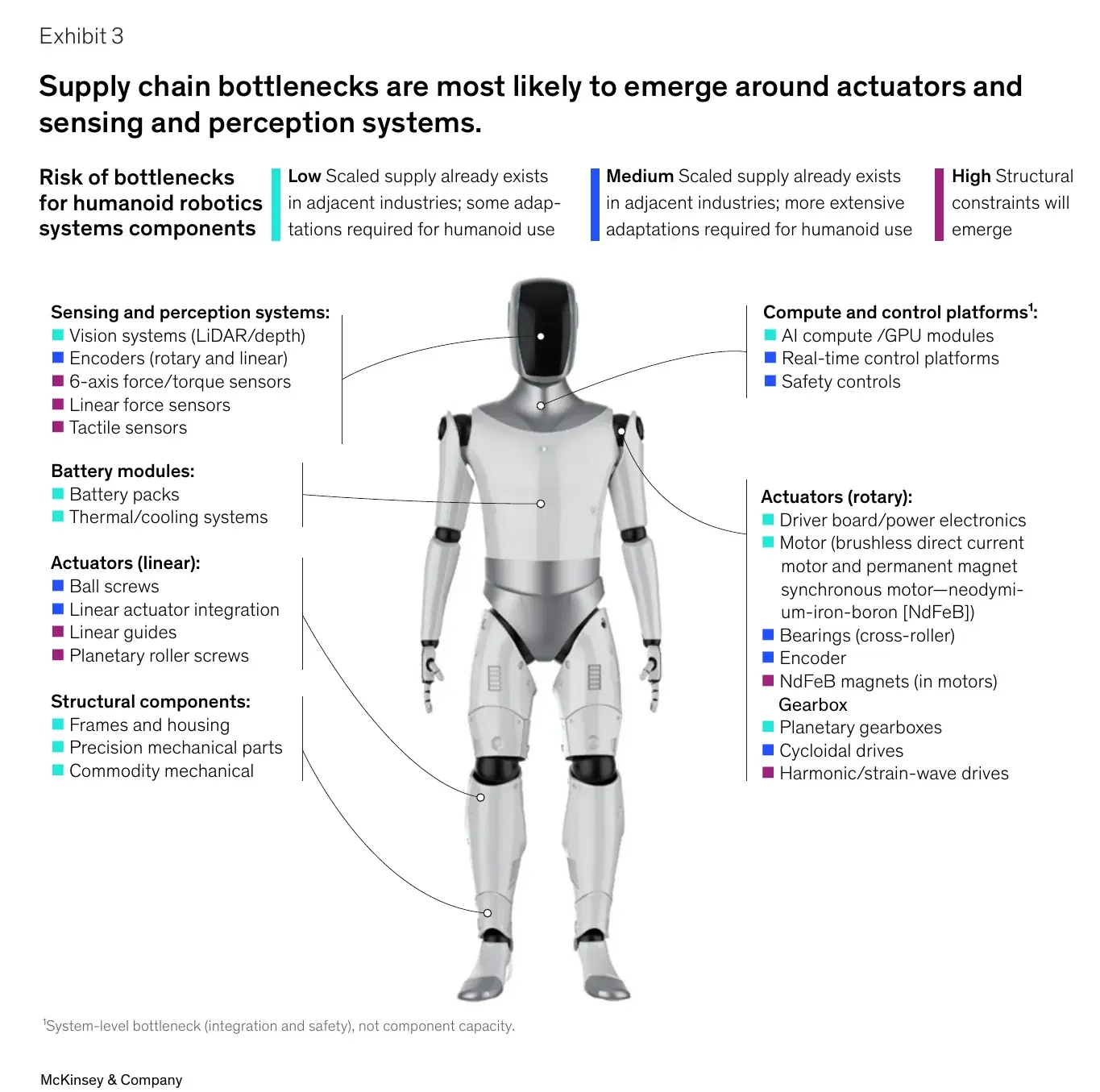
Six components carry high supply risk as volumes rise.2 They are strain-wave gearboxes, neodymium magnets, tactile sensors, two kinds of force sensor, and planetary roller screws, the threaded rods that push a knee or an elbow in a straight line. Motors, standard bearings, cameras and battery cells carry low risk because scaled supply already exists.
One line inside the joint is collapsing in price. Filings from Leju, a Chinese humanoid maker, show its spend on motor driver boards per joint falling 83% in two years.4
§ 04 //
The hand is where the robot stops working
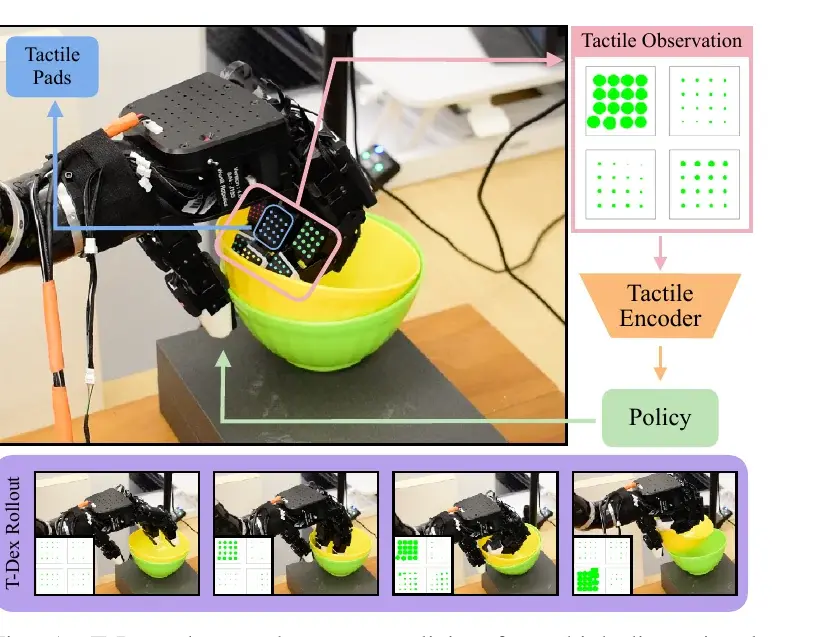
A humanoid fails first at the task that needs touch. In September 2026 Figure AI sent its newest robot into thirty homes it had never entered, to make beds, fold towels and put toys in a basket. It finished 237 of 420 attempts, about 56%.7
The split by task is the useful part. The robot made the bed 67% of the time, folded the towel 62% of the time and put the toys away 40% of the time.7 Cloth can be gripped anywhere and squeezed at any pressure. A toy has to be felt while it is held, and the grip adjusted.
Robot hands already match a human hand on movement. Optimus and 1X's NEO each move in 22 independent ways across the fingers and palm, against 21 for a human hand.8 What they lack is feel and stamina. Touch sensors improved results 1.7 times over cameras alone across five delicate tasks, the data they produce is scarce, and no two labs record it the same way.9 No maker publishes how many grasps a hand survives before it fails.
§ 05 //
Movement data already existed, and handling data is collected by hand
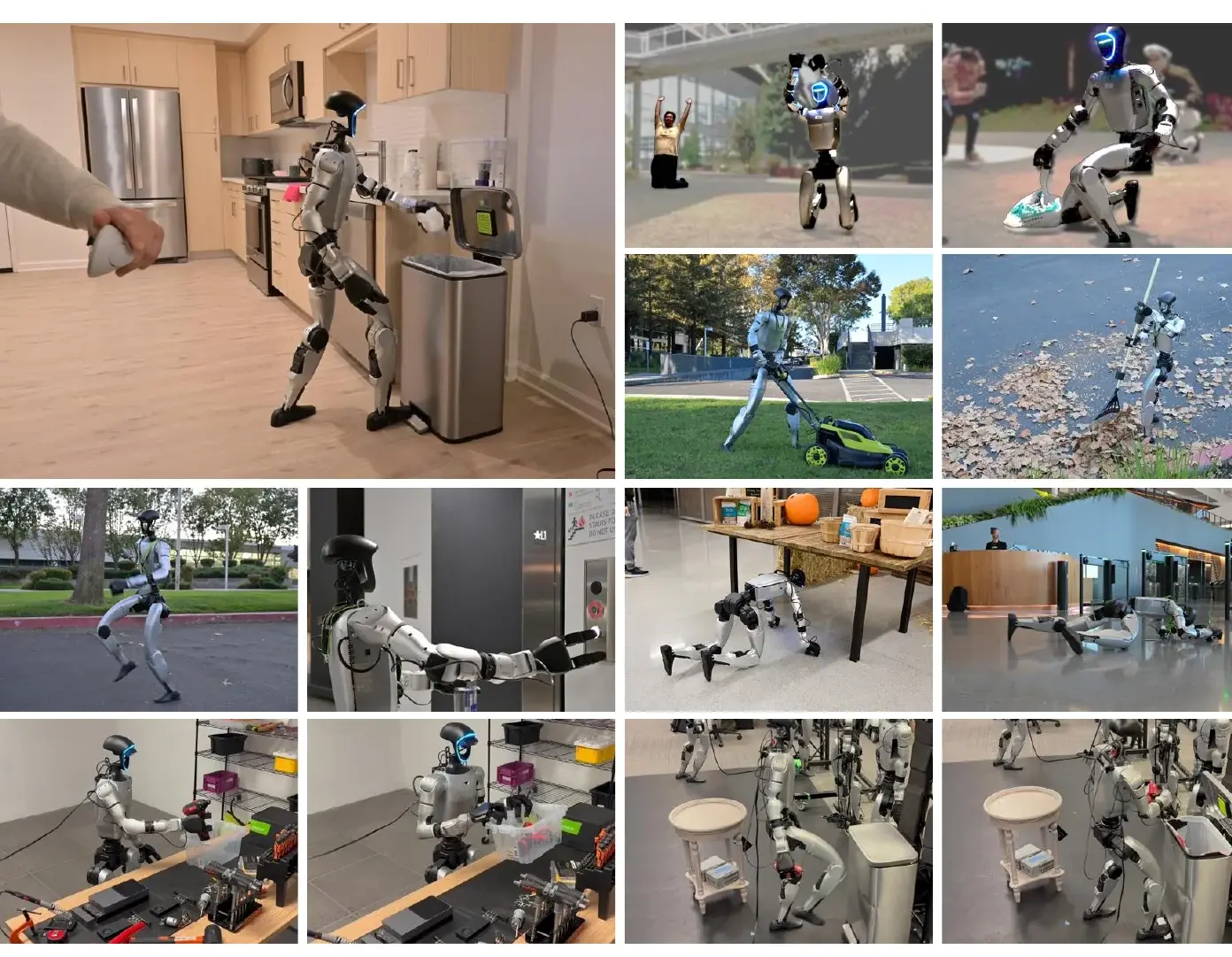
Software that moves a robot's body works today because the training data was already recorded. Film and game studios have captured actors' joint positions frame by frame since the 1990s. NVIDIA's SONIC project trained a controller on about 700 hours of that footage, and on a real robot it performed 123 of 124 movements.10
No such archive exists for hands. A camera sees the outside of a hand and records nothing about how hard it squeezes. Handling data has to be gathered by teleoperation, where a person drives the robot remotely through each task, one recording at a time.
The numbers show the gap. The largest open dataset recorded on a two-legged humanoid with fingered hands holds 10,300 recordings. The largest recorded on robot arms holds 1.4 million.11 A leading handling model trained on about 50,000 hours from twenty machines still completed about a third of its tasks in full.12
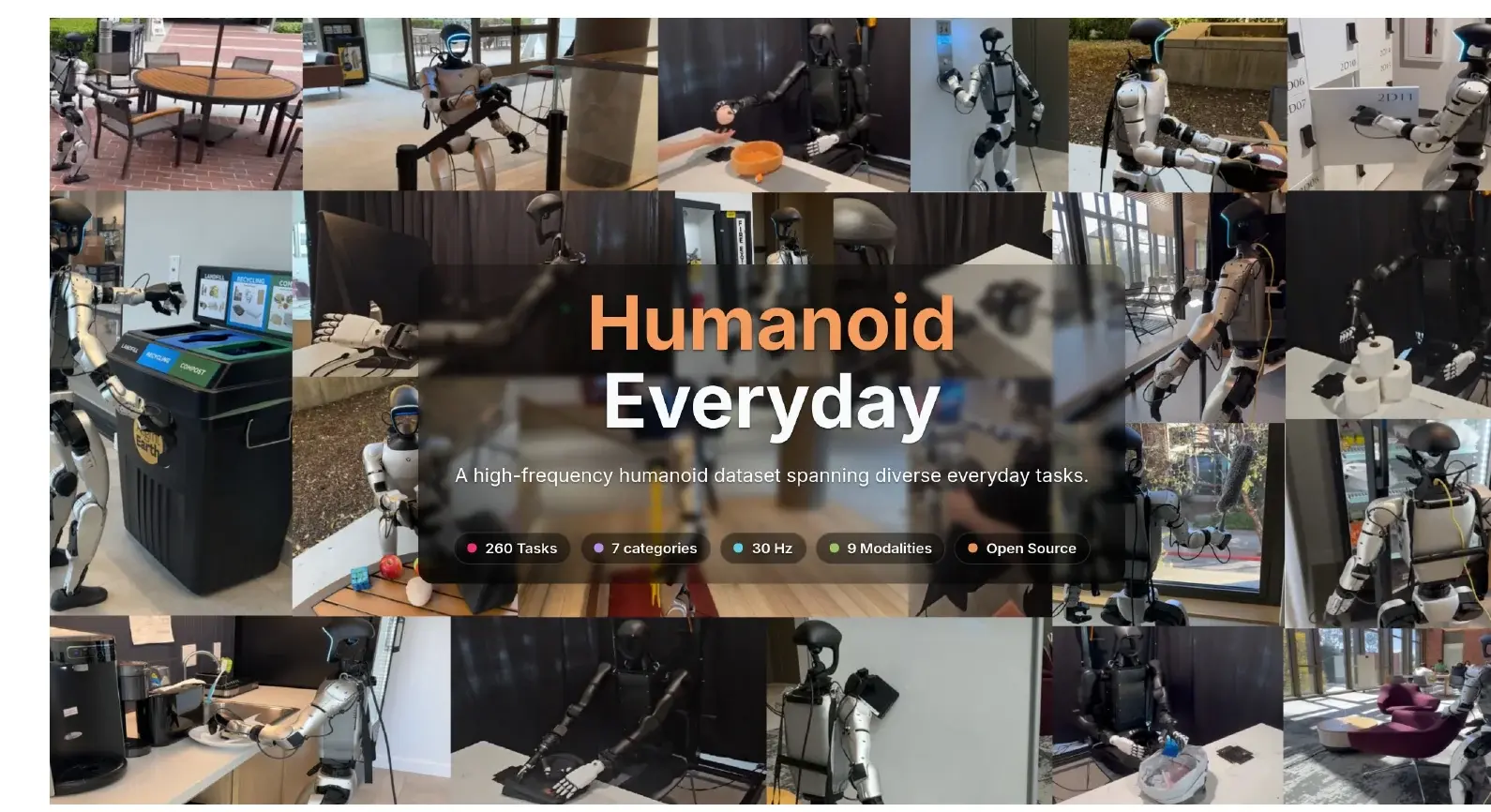
Indian firms already sell into this shortage. Foreign labs pay Indian workers to wear cameras through a shift, and Deccan AI raised $25 million in 2026 to build that business.1314
§ 06 //
Nobody sells the controller between the brain and the joints
The processors exist and the part that joins them to the body is missing. NVIDIA and Qualcomm sell the chips that plan a movement. Infineon and Texas Instruments sell the cheap chips that drive each motor. Between them sits a controller that turns a plan into commands for 20 to 40 joints many times a second.
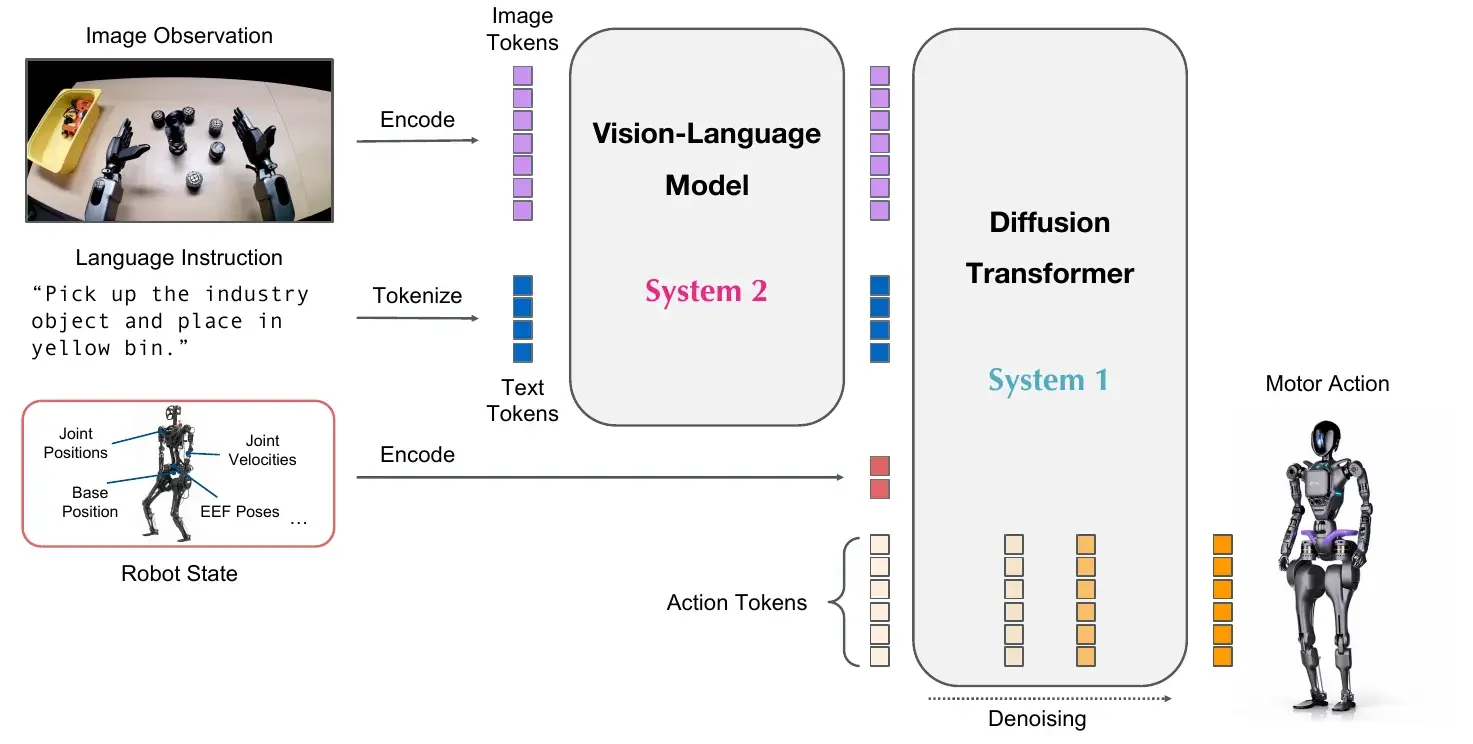
A car has this part, the engine control unit, and buys it certified from a supplier. A humanoid has no equivalent, so every maker builds its own.2 Certification decides where a robot may work, because a machine that operates beside people without a safety fence has to prove it will stop.
§ 07 //
In India, the robot that sells today has one job
A humanoid does not pay for itself against Indian wages. Agility prices its next Digit at about $400,000 over five years with deployment, software and upkeep, around ₹6.4 lakh a month. The two and a half shifts of warehouse labour it replaces cost about ₹57,500 a month in India, so the machine costs roughly eleven times the work, by my arithmetic.15
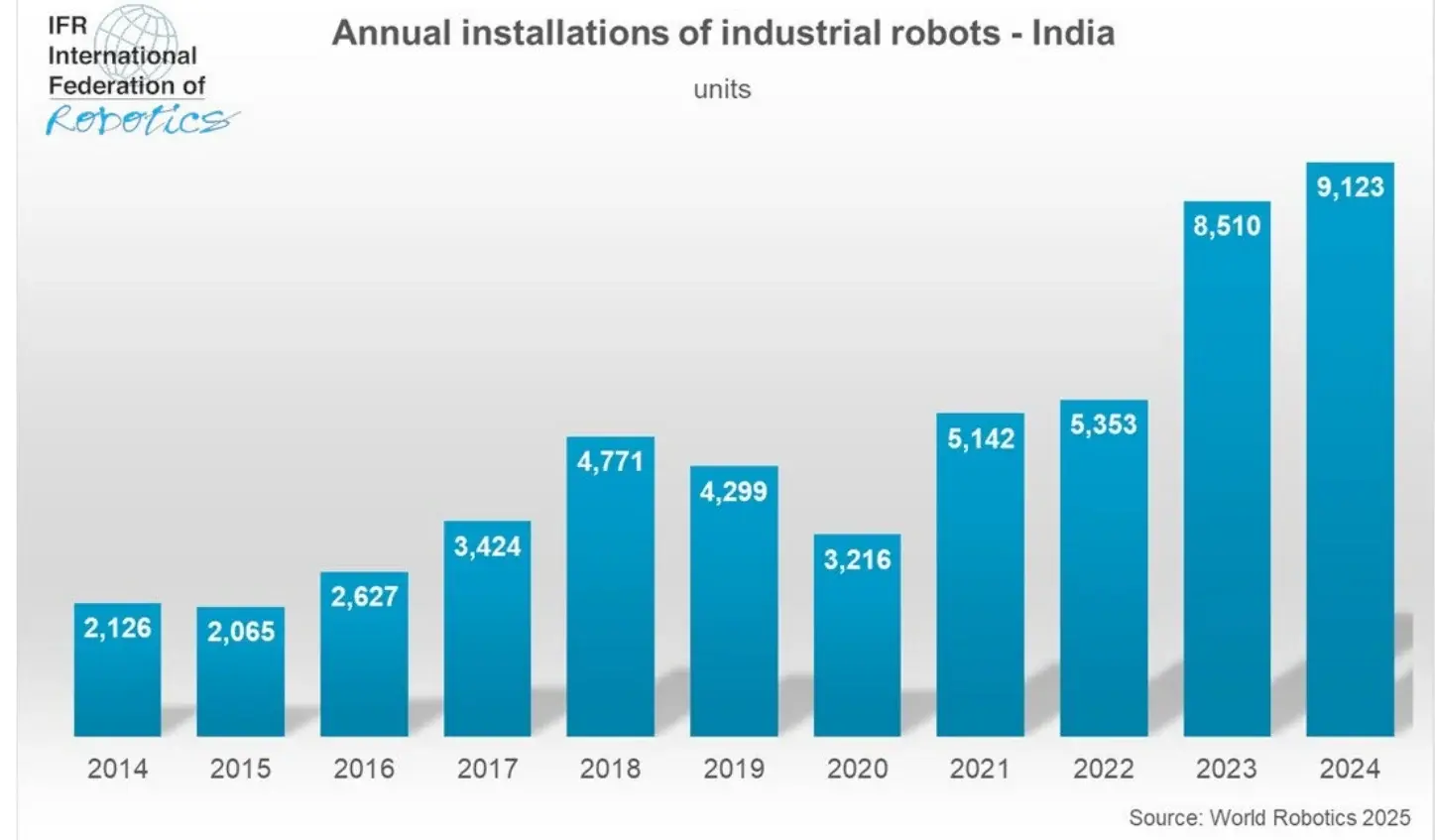
Purpose-built robots already sell. India installed 9,120 industrial robots in 2024, a record, and car plants and their suppliers took 4,070 of them.16 SS Innovations reports 224 of its SSi Mantra surgical systems in 12 countries, a company figure.17 Genrobotics had deployed over 350 Bandicoot sewer-cleaning robots across 23 states by December 2024.18 Each machine does one paid job.
The buying reason in a factory is attrition. Automotive attrition rose to about 12.4% in 2024, and more than 43% of contract workers leave within a year, so a plant loses process knowledge every time somebody resigns.19
Payback is the brake. One Indian hose maker installed plant-tracking software that lifted equipment output about 10% and halved rejections, and payback still took around six years. The sector runs on operating margins of 11 to 12%, and small and medium firms are about 70% of it.19
§ 08 //
India makes three of the four parts in a leg joint
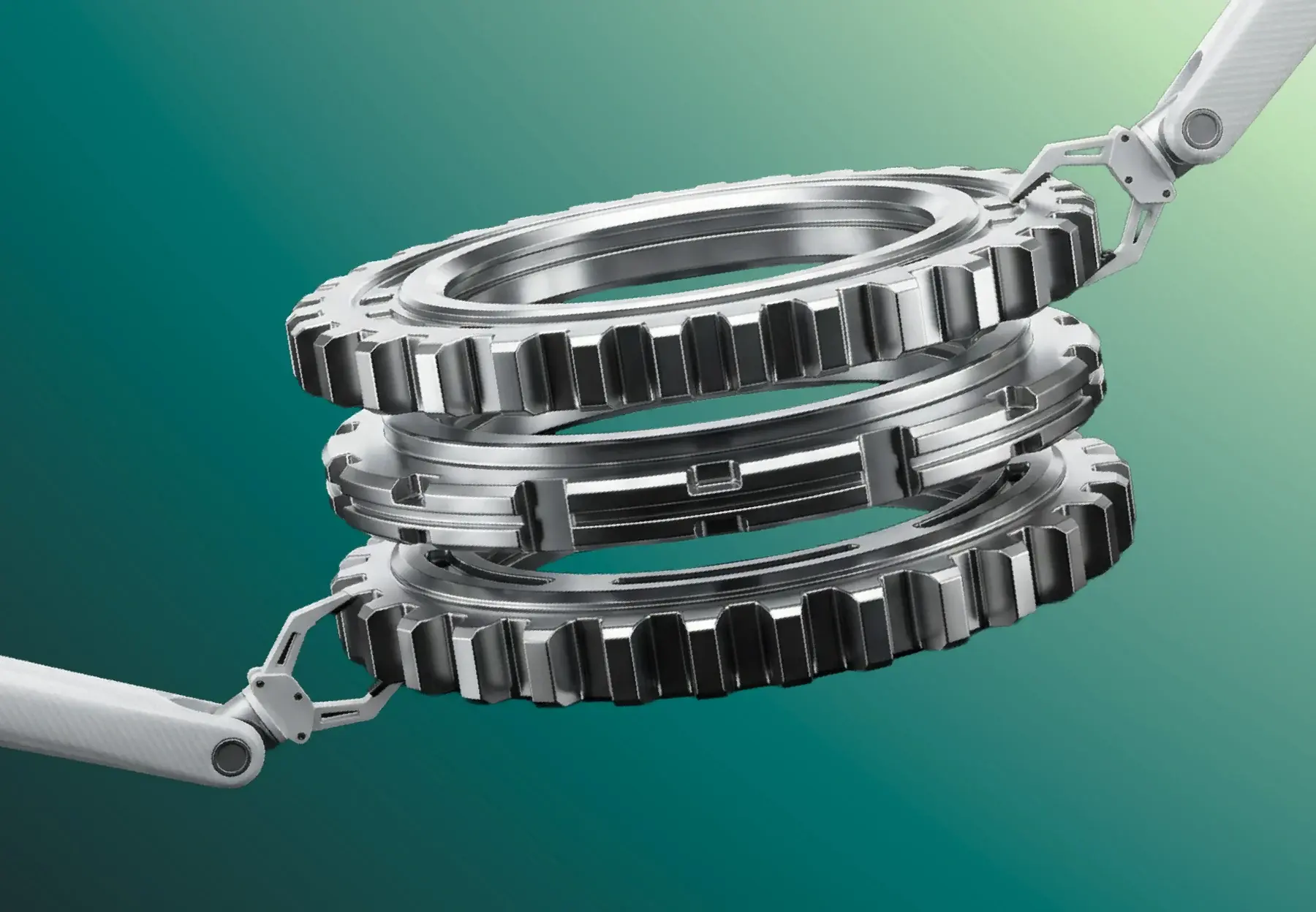
A leg joint is gears, a motor, a circuit board and magnets, and India's auto-parts industry, which turned over ₹7.59 lakh crore last year, makes the first three.20 India has no strain-wave gearbox or roller screw industry, so the wrist and the hand stay with Japan and China.
Magnets are the gap. The government's ₹7,280 crore scheme funds 6,000 tonnes a year of magnet capacity and drew 20 bids in August 2026.21 Bengaluru's Vimag Labs raised $5 million, led by Accel, for a motor that needs no magnets, and its pilots so far are with vehicle makers.22
Buyers have a reason to look. In July 2026 the United States barred new foreign-made robot models from the authorisation they need to be sold there, a rule that in practice lands on China.23
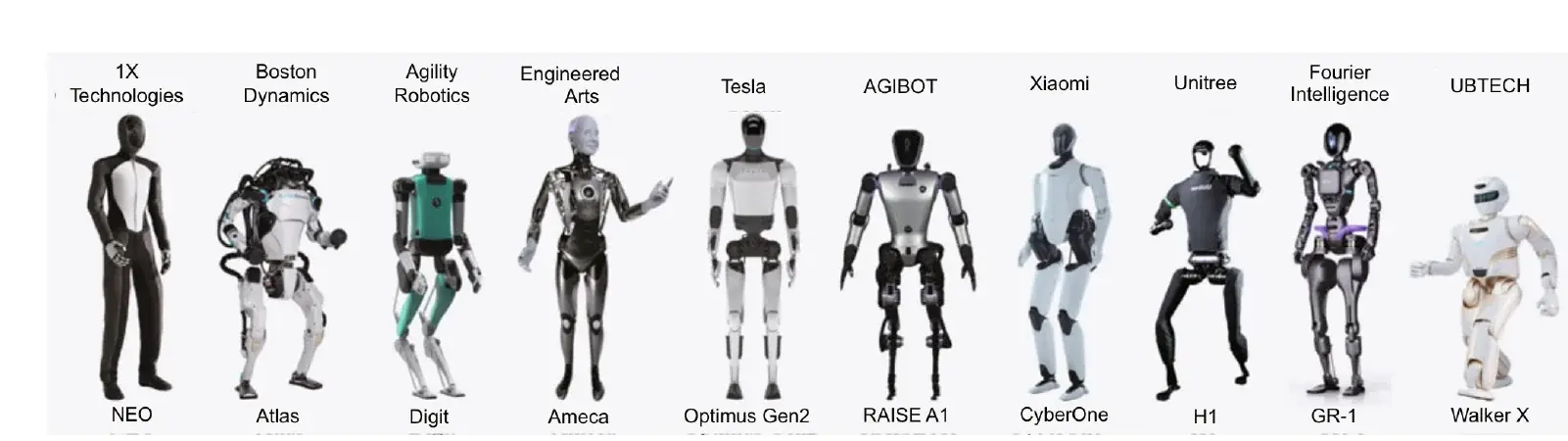
The first contracts went to large firms. Hyundai Mobis agreed in January 2026 to supply actuators for Boston Dynamics' next Atlas, and Schaeffler signed three humanoid actuator partnerships in five months.24 In India, Sona Comstar signed with Germany's NEURA Robotics in October 2025 to develop humanoid components.24 These are development agreements, which carry no volume commitment.
Capital is thin. Indian physical AI startups raised about $155 million across 31 deals in the first seven months of 2026, against $130 million in all of 2025, and three rounds made up more than half of the 2026 total.14
§ 09 //
The five things I look for
| What | Why it is open | What exists in India | What I ask to see |
|---|---|---|---|
| Leg and hip actuators on planetary gearing | Up to 80% cheaper than the precision joint, and cut on ordinary gear machines | Sona Comstar's agreement with NEURA; an auto-parts base | A contract that carries a volume number |
| Motors that need less magnet, or none | China makes about 94% of sintered neodymium magnets | Vimag Labs; 20 bids under the magnet scheme | Torque per kilogram against a magnet motor, measured by a customer |
| Touch sensing and durable hands | The task that needs feel scores 40% where cloth scores 67% | Perceptyne's ten-jointed hands; CynLr's vision-led picking | Grasps survived before failure, published |
| The controller and safety layer | No certified part joins the planning chip to the joints | Addverb's in-house driver boards; Netrasemi's A2000 chip, in volume from 2027 | A certification route with a named standard |
| Handling data | 10,300 humanoid recordings against 1.4 million on arms | Deccan AI and a group of data-collection firms | Proof that a lab's model improved on the data |
§ 10 //
Three things I pass on
01 // Humanoids sold to Indian buyers on wage savings
The machine costs about eleven times the labour.
02 // Motor driver boards as a standalone business
Indian firms are strong here, and the price of the part fell 83% in two years at one large buyer.
03 // Robots bought to be noticed
Between 2014 and 2020 Indian humanoids were sold mostly to banks, hotels and events as reception robots.26 The Indian robot from those years that still has a growing job is Bandicoot, which cleans sewers and has no human shape.
§ 11 //
What would change this thesis
One result would confirm it: an Indian actuator contract with a volume number attached.
Until then the measure is the opening pair of figures. The $85,000 between the two builds of Optimus, by my subtraction, is what a buyer pays today for a supply chain outside China. Every position above is a claim on part of it.